Symmetric vs. Asymmetric Encryption
Overview
Cryptography protects information using mathematical methods that make data unreadable or verifiable, supporting confidentiality, integrity, authentication, and non-repudiation. Symmetric and asymmetric encryption are the two fundamental approaches everything else builds on.
Key concepts
- Symmetric: one shared key, fast, key-distribution problem
- Asymmetric: public/private key pairs, RSA, Diffie-Hellman
- Hybrid use in TLS/HTTPS
How it works
Symmetric encryption
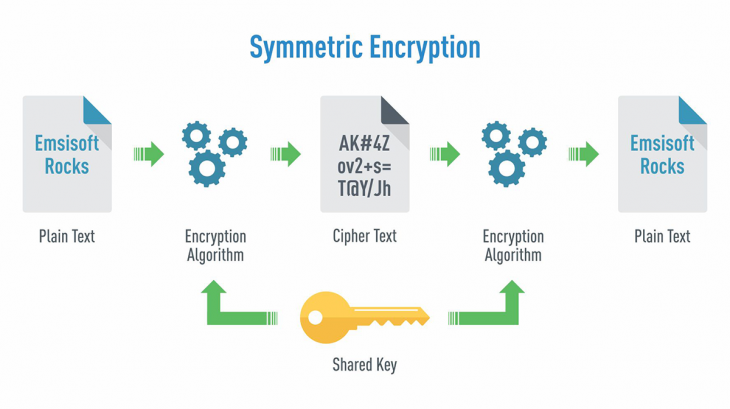
Uses the same secret key to encrypt and decrypt data. Both sender and receiver must securely possess that same key.
| Advantages | Limitations |
|---|---|
| Fast — works well for encrypting large amounts of data | Securely sharing and protecting the secret key is the main challenge |
Asymmetric encryption
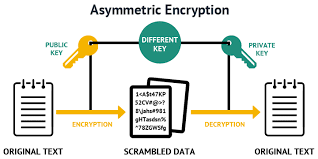
Uses two related keys — a public key and a private key. Data encrypted with one key can only be decrypted with the matching key.
| Term | Meaning |
|---|---|
| Public key | Can be shared openly — used to encrypt data or verify digital signatures. |
| Private key | Must be protected — used to decrypt data or create digital signatures. |
| Key pair | A matched public key and private key created together. |
| RSA | An asymmetric algorithm commonly used for encryption, key exchange, and digital signatures. |
| Key exchange | The secure process of establishing or sharing encryption keys between parties. |
| Diffie-Hellman | A key-exchange method letting two parties establish a shared secret over an untrusted network. |
| Advantages | Limitations |
|---|---|
| Simplifies secure key sharing — public keys can be distributed openly | Slower than symmetric encryption; usually used for key exchange, identity verification, and signatures rather than bulk data |
How they work together
Symmetric and asymmetric encryption are typically combined when establishing a connection. In HTTPS/TLS, for example, you establish a shared secret using asymmetric cryptography, then use that shared secret for fast symmetric encryption for the rest of the conversation.